Swim between the red and yellow flags
Lifeguards choose the safest stretch of water each day, away from rip currents and rocks, and mark it with red and yellow flags. That is the stretch they watch, so it is the only place to swim. A plain red flag means the sea is closed. If there are no lifeguards on duty, do not swim.
Amanzimtoti's main beach, a short walk from the duplexes, has lifeguards. Ask them about the day's conditions: they are glad to help, and children love meeting them.
Within arm's reach
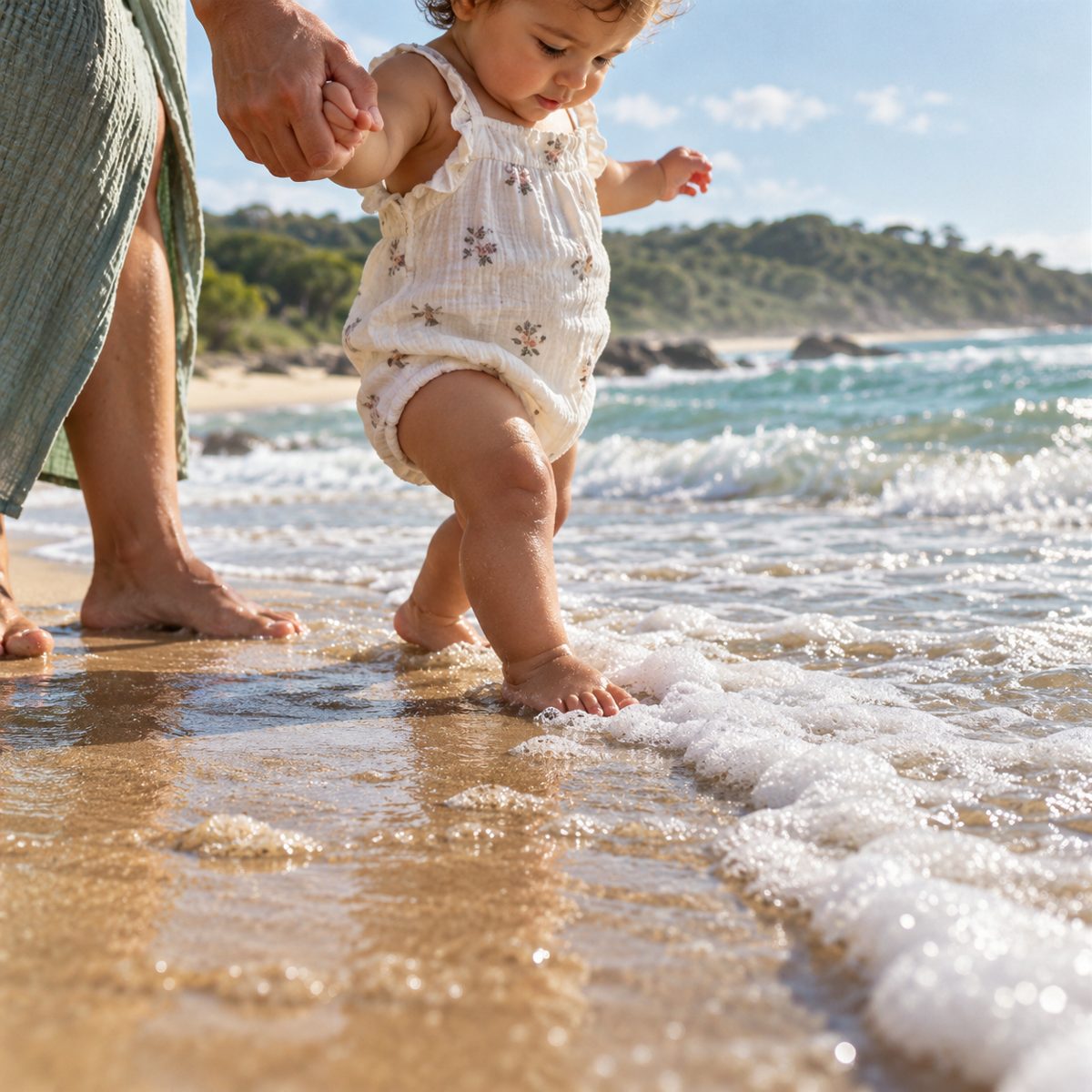
Drowning is quick and usually silent. A child in trouble often cannot splash, wave or call out. The NSRI's advice is to keep young children within arm's reach in and near the water, with one adult whose only job is to watch them. Take turns, so the watcher is never on a phone or reading.
Armbands and inflatable rings can give children (and parents) false confidence, and they blow away in the wind. They are no substitute for an adult in the water.
Rip currents: spot one, escape one
A rip current is a narrow channel of water flowing back out to sea. It looks like a calmer, darker or sandy-coloured gap between the breaking waves, sometimes with foam or debris moving out. Rips do not pull you under; they carry you away from the shore.
Teach older children what the NSRI teaches: if you are caught, don't panic and don't fight it. Float, raise an arm, and swim parallel to the beach until you are out of the pull, then let the waves bring you in. If you see someone else in a rip, do not go in after them: call a lifeguard, throw something that floats, and phone 112.
Bluebottles
On onshore winds, especially in summer, bluebottles wash up on KZN beaches. Their blue tentacles sting even when the animal looks dead on the sand, so teach children to look and not touch.
If a child is stung, the Poison Information Centre at Stellenbosch University advises not rubbing or scratching the sting and rinsing it with sea water, not fresh water, which can make the remaining stinging cells fire. Lift off any tentacles with something blunt, such as a bank card. Warm (not scalding) water helps the pain. Get medical help at once for any trouble breathing or swelling of the face or throat.
The sun
CANSA warns that two blistering sunburns before the age of 18 greatly raise the risk of skin cancer later in life. Its advice for families:
- Babies younger than one should never be in direct sunlight
- Stay out of the sun between 10am and 4pm where you can, and play in the shade
- Sunscreen of SPF 20 to 50 (higher for fair skin), 20 minutes before going out, and again at least every two hours and after swimming or towelling
- Wide-brimmed hats rather than caps, covering swimwear and UV400 sunglasses
Save these numbers before you go
Put 112 (emergency, from any mobile) and the NSRI's emergency operations centre, 087 094 9774, in your phone before the holiday. Cabana Mio's arrival guide lists the nearest hospital, police and ambulance numbers.
Questions
Is it safe for young children to swim at Amanzimtoti?
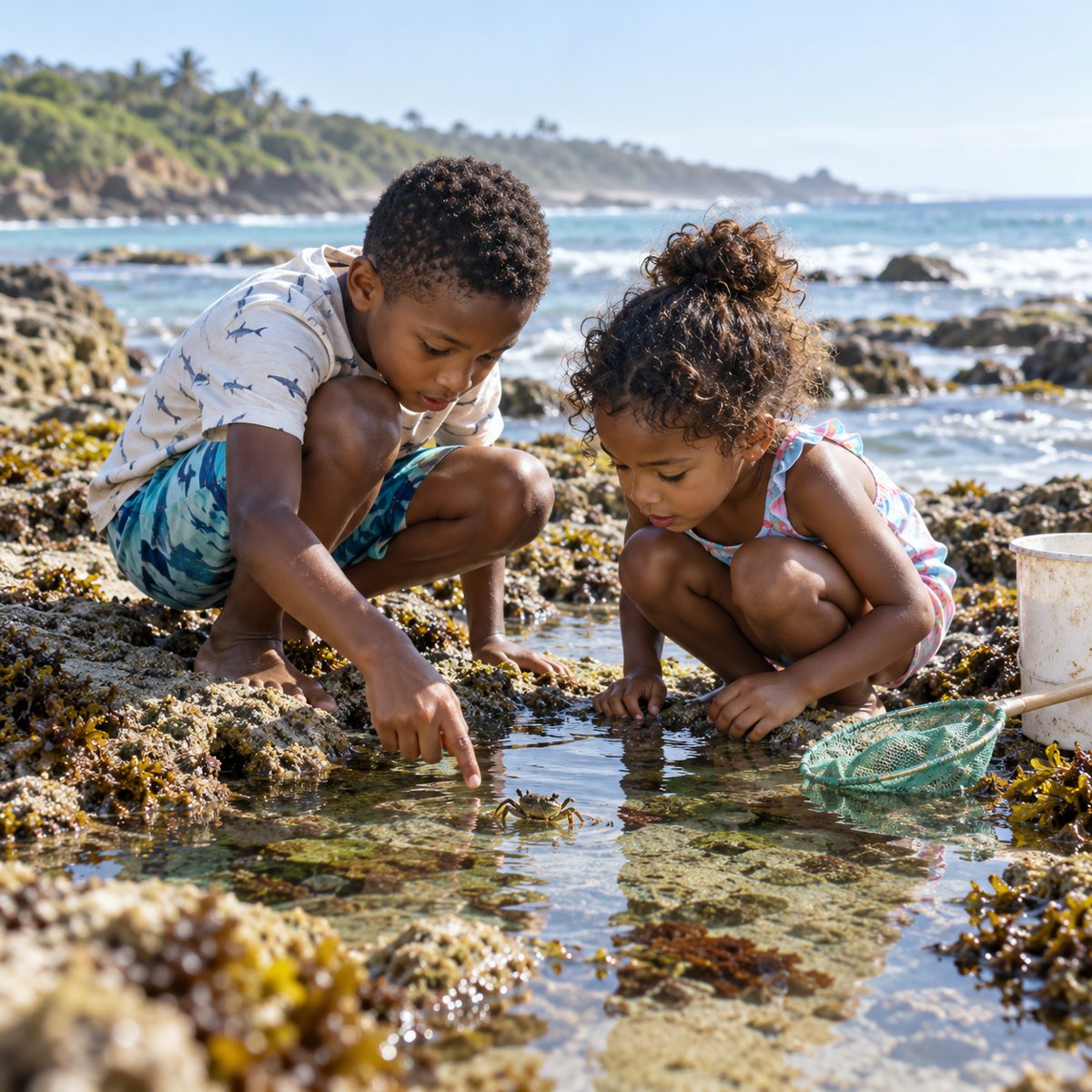
Yes, at a lifeguarded beach, between the red and yellow flags, with an adult within arm's reach. Rock pools and tidal pools are gentler places for the youngest children to start.
What should my child do if they are pulled out to sea?
Float, raise an arm and swim parallel to the beach until out of the pull, then come in with the waves. Never try to swim straight back against it (NSRI).
How do I treat a bluebottle sting?
Don't rub it. Rinse with sea water, not fresh water, lift off tentacles with something blunt, and use warm water for the pain. Seek urgent help for any breathing difficulty or facial swelling.
Sources: NSRI safety advice (EWN, 22 Sep 2026) · Lifesaving South Africa on the red and yellow flags (Daily News) · Stellenbosch University Poison Information Centre: marine stings · CANSA, Be SunSmart · Cabana Mio arrival guide (directions, emergency numbers). Checked October 2026.