Arrive on Friday, settle on Saturday
A Friday arrival gives you two weekends at the coast. Use the first evening to unpack, find the beach path and walk down for a first look at the sea, without swimming. Children sleep better in a new place once they have seen it in daylight and know where the bathroom is.
Keep Saturday slow: a morning on the sand, lunch back at the duplex, a nap or quiet time, then a short late-afternoon swim when the sun is lower.
A rhythm that works with small children
Most families find the same pattern works every day: beach early, indoors over the middle of the day, out again after four. The sun is fiercest from mid-morning to mid-afternoon, and tired, hot children are the main reason beach days go wrong.
Plan one outing for every two beach days. A rainy-day option in your back pocket (an aquarium, a museum, a movie) saves the week if the weather turns.
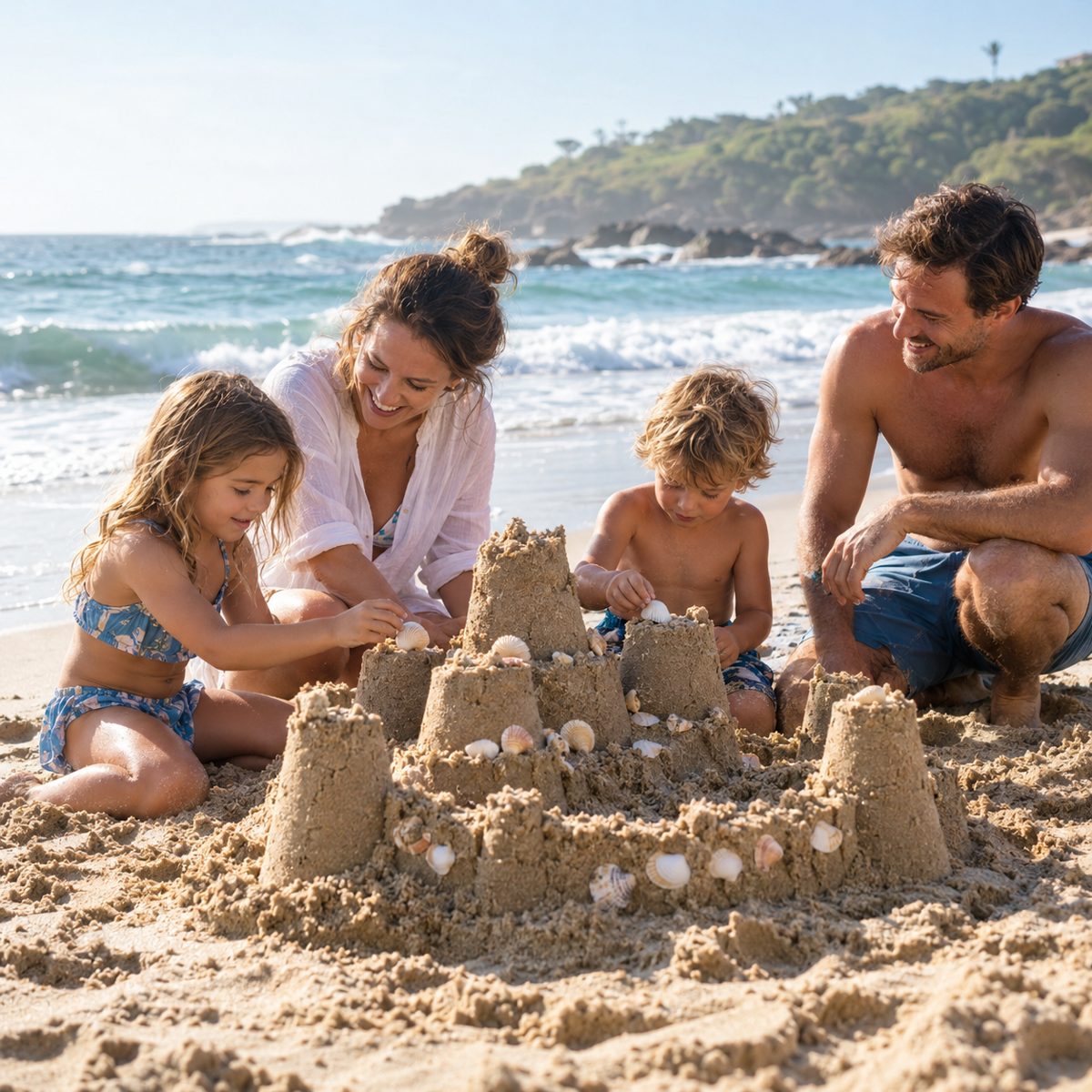
- Early: beach, rock pools, sandcastles
- Midday: lunch, nap or quiet play indoors
- Late afternoon: a swim, a walk, the playground
- Evening: braai on the patio, bath, early night
What to pack for the children
Self-catering means you can bring what your children like to eat. For the beach itself:
- Two swimsuits each, so one is always dry
- A rash vest or long-sleeved swim top, and a wide-brimmed hat (not a cap)
- Sunscreen, SPF 20 to 50 or higher for fair skin, and a beach umbrella or small tent for shade
- A bucket, spade and a small net for the rock pools
- Water shoes for the rocks, and a towelling robe or warm top for after swimming
- A small first-aid kit: plasters, antiseptic, an antihistamine, a thermometer and your child's usual medicines
- Night lights and a favourite blanket or toy from home
Beach rules to agree before the first swim
Children follow rules best when they hear them before the excitement starts. Agree three simple ones on the walk down: we only swim where the lifeguards are, between the red and yellow flags; a grown-up is always in the water with you; and if you feel the water pulling you, float on your back and wave.
The NSRI asks parents to keep young children within arm's reach in the water, because a child in trouble often cannot splash or shout. Our guide to beach safety for little ones covers flags, rip currents and bluebottles in more detail.
Make it theirs
Give each child a job: the shell collector, the rock-pool guide, the one who checks the flags. A cheap disposable camera or a holiday scrapbook turns the week into a story they will retell. Because a membership brings you back to the same place every year, these small traditions become the thing they ask about months before the next holiday.
Questions
What is the best age for a first beach holiday?
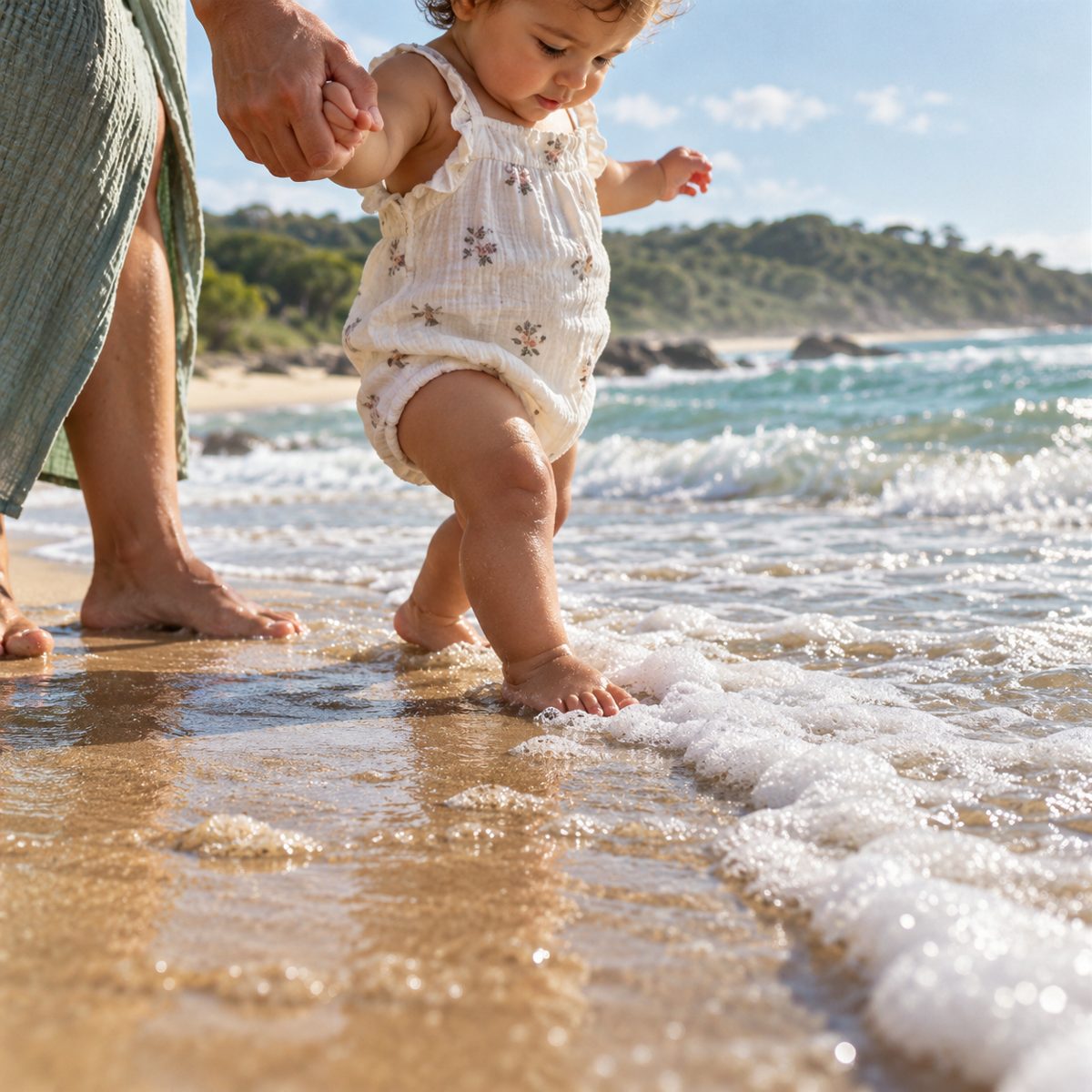
Any age works with the right rhythm. Babies under one should be kept out of direct sun altogether (CANSA), so shade and early or late beach time matter most. From about four, children can learn the flag rule and enjoy rock pools and paddling.
How far is the beach from the duplex?
Less than 100 m, along a sandy path through the coastal bush. Amanzimtoti's main beach, with lifeguards, is within walking distance.
What if it rains?
Summer rain on this coast usually comes as a late-afternoon storm, so mornings are often clear. For a wet day, the family days-out map lists rainy-day options, most under half an hour away.
Sources: NSRI safety advice (EWN, 22 Sep 2026) · Lifesaving South Africa on the red and yellow flags (Daily News) · CANSA, Be SunSmart. Checked October 2026.